

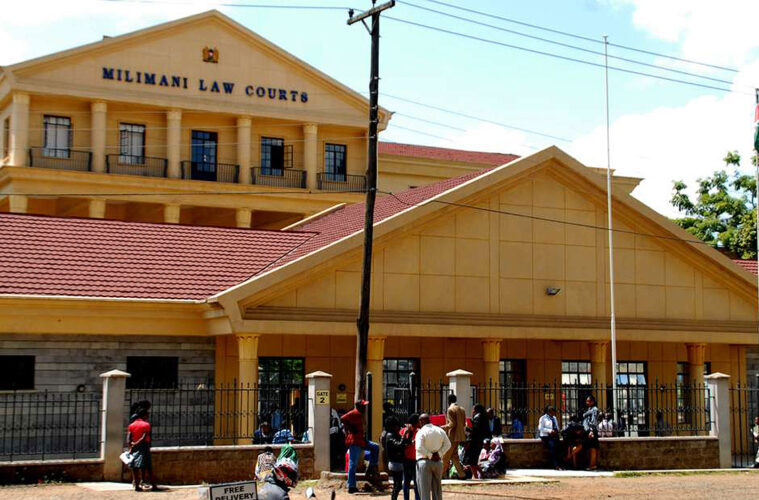
The March 6, 2026, Court of Appeal judgment in the Computer Misuse and Cybercrimes Act case is being hailed as a watershed moment for Kenya’s digital landscape. While the striking down of Sections 22 and 23 is a victory for free speech, the court’s decision to uphold surveillance and harassment provisions has created a complex new legal reality for every Kenyan with a smartphone.
The case was filed by the Bloggers Association of Kenya (BAKE), Article 19 Eastern Africa, the Kenya Union of Journalists (KUJ), and the Law Society of Kenya (LSK) and others.
Here is an analysis of the immediate and long-term repercussions of this historic ruling.
1. The death of the “Fake News” charge
The most immediate repercussion is the removal of the state’s primary tool for policing online truth.
- A Shield for Satire and Error: By labeling Sections 22 and 23 as “unguided missiles,” the court has protected social media users from being jailed for up to 10 years for simple mistakes, satire, or sharing unverified content.
- The “Galileo Precedent”: The judges officially recognized that “truth” is often subjective and evolving. This prevents the state from acting as the sole referee of reality—a major win for political dissent.
- Immediate Discharge: Legal experts (including BAKE’s counsel, Mercy Mutemi) are now calling for the immediate discharge of all individuals currently facing charges under these sections. Any ongoing “false information” prosecutions are now technically unconstitutional.
2. The Shift from Criminal to Civil Liability
While the state can no longer jail you for false publications, the accountability for what you post hasn’t disappeared, it has shifted.
- Civil Defamation Surge: Without the threat of prison, individuals and corporations are expected to rely more heavily on Civil Defamation suits.
- Private Pockets, Not Public Jail: You won’t face a cell, but you could face massive financial penalties. The repercussion here is that digital accountability is now moving from the criminal justice system to the civil courts, placing a higher financial risk on high-profile bloggers and journalists.
3. Vigilant gatekeeping vs. Mass surveillance
Perhaps the most controversial repercussion is the court’s decision to uphold Sections 48–53 (Investigative Powers).
- Surveillance is Legal, but Conditional: The police still have the legal right to seize devices and conduct real-time surveillance for up to six months.
- The Burden on the Judiciary: The court shifted the responsibility of privacy protection to the magistrates and judges. These judicial officers are now under immense pressure to act as “vigilant gatekeepers.”
- Potential for Abuse: Activists warn that despite the requirement for warrants, these powers could still be used for political profiling, especially following the surveillance trends seen during the June protests.
4. The “Bittersweet” Retention of Cyber Harassment
The court upheld Section 27 (Cyber Harassment), a move that has drawn sharp criticism from the Committee to Protect Journalists (CPJ) and ICJ Kenya.
- The Subjectivity Trap: Section 27 uses terms like “detrimentally affects” and “grossly offensive.” The repercussion is that “harassment” remains a subjective charge that can still be weaponized to arrest journalists or critics who publish unfavorable (but true) information that “affects” a public official.
- Disproportionate Penalties: With fines reaching Ksh 20 million and 10-year prison terms, this section remains the “new frontline” for digital rights litigation.
5. Constitutional Precedent: The three-tier test
Legally, this judgment reinforces a strict Three-Tier Test for any future laws that seek to limit the Bill of Rights. Any new law must now prove:
- Legality: Is the law precise and clear? (Sections 22 and 23 failed this).
- Legitimacy: Does it serve a valid aim (like national security)?
- Necessity: Is it the least restrictive way to achieve that aim?
Summary Table: Repercussions at a Glance
| Area | Status | Practical Repercussion |
| “Fake News” | Illegal | You cannot be arrested for sharing unverified info. |
| Opinions/Satire | Protected | Safeguarded from criminal prosecution. |
| Personal Privacy | Conditional | Devices can be seized, but only with a specific warrant. |
| Online Tone | Regulated | “Cyber-harassment” remains a high-risk criminal area. |
| Reputation | Civil | Expect an increase in private lawsuits for damages. |