

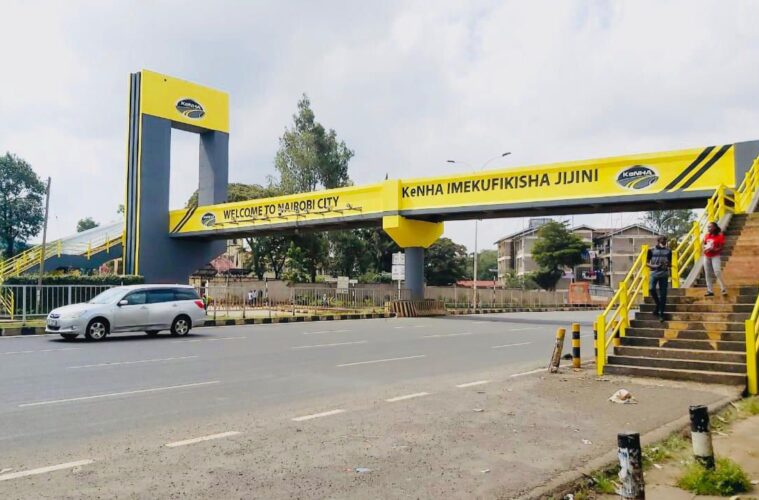
Imagine driving home on Waiyaki Way on a clear evening. The road is familiar, the surface is predictable. You wake up the next morning, join the commute, and suddenly—without a single warning sign or a lick of yellow paint, your vehicle hits a series of rumble strips and three massive, mismatched bumps. By sunset, the local police abstracts at Kabete and Muthangari are filling up with reports of rear-end collisions and lost control.
This isn’t a hypothetical scenario; it is a recurring nightmare for Nairobi motorists. It raises a stinging question: If a doctor can lose their license or face jail for medical malpractice, why do KeNHA engineers walk away scot-free when their “road improvements” cause loss of life and property?
For a long time, the Kenya National Highways Authority (KeNHA) operated under a veil of perceived invincibility. However, the legal tide is turning. Under the Kenya Roads Act (2007) and the Occupier’s Liability Act, KeNHA has a non-negotiable “Duty of Care” to road users.
When KeNHA erects an unmarked bump in the middle of the night, they are moving from non-feasance, simply not fixing a road, to misfeasance, doing a job so poorly it creates a new danger.
The era of KeNHA being untouchable hit a roadblock in 2020. Senior Counsel Ahmednasir Abdullahi successfully sued the Authority after his vehicle was damaged by shrapnel on a road under construction. The court ruled that KeNHA is legally obligated to ensure the safety of motorists through proper signage and barriers.
If KeNHA is liable for a cracked windscreen, they are infinitely more liable for the “overnight” bumps on Waiyaki Way that lead to multi-car pileups.
We often see the Kenya Medical Practitioners and Dentists Council (KMPDC) take action against negligent doctors. The engineering equivalent is the Engineers Board of Kenya (EBK).
- Professional Malpractice: Under the Engineers Act (2011), an engineer who authorizes sub-standard, unmarked road furniture can be investigated for professional misconduct. This can lead to the suspension or revocation of their practicing license.
- The Jail Term Reality: While rare, if a prosecutor can prove that a road official acted with “reckless disregard for human life”—such as installing hazardous obstructions without the mandatory Kenya Standard KS 774 warnings—they can technically be charged with criminal negligence or manslaughter.
The police abstracts at various police stations tell a silent story of engineering failure. When an accident occurs because a motorist “did not know those things were erected,” the fault lies not with the driver’s speed, but with the Authority’s failure to communicate.
KeNHA often justifies these bumps as a response to pedestrian fatalities. However, solving a pedestrian safety issue by creating a high-speed collision hazard is not engineering, it is negligence.
The culture of install now, paint later must end. Motorists pay billions in fuel levies with the expectation of safe passage.
If you are a victim of these unmarked overnight hazards, the path to justice is clear:
- Document everything: Photos of the unmarked bump and the lack of signage are your strongest weapons.
- File the Abstract: Ensure the police record specifically mentions the lack of warning signs.
- Sue for Damages: Use the 30-day notice period under the Government Proceedings Act to hold the Authority’s wallet—and their engineers’ reputations—accountable.