

The countdown to the 2026 FIFA World Cup has been dramatically accelerated. The Final Draw, held in Washington, D.C., has concluded, establishing the 12 groups for the expanded 48-team tournament, hosted by the United States, Mexico, and Canada.
The stage is set for a historic moment as the FIFA World Cup 2026 kicks off with a familiar matchup: Mexico vs. South Africa. This contest serves as a direct replay of the thrilling 2010 tournament opener. Back then, South Africa proudly inaugurated the first World Cup on African soil. Now, in 2026, it is Mexico’s turn to host the eagerly-awaited opening match in what will be a massive symbolic echo of that famous fixture.
FIFA World Cup 2026 Group Stage
Here are the official results from the Final Draw:
| Group | Pot 1 Seed | Pot 2 Team | Pot 3 Team | Pot 4 Team |
| A | Mexico (Host) | South Korea | South Africa | UEFA Play-off D (e.g., Rep. of Ireland) |
| B | Canada (Host) | Qatar | Switzerland | UEFA Play-off A (e.g., Wales/N. Ireland) |
| C | Brazil | Morocco | Scotland | Haiti |
| D | USA (Host) | Paraguay | Australia | UEFA Play-off C (e.g., Turkey/Slovakia) |
| E | Germany | Ivory Coast | Ecuador | Curacao |
| F | Netherlands | Japan | Tunisia | UEFA Play-off B (e.g., Ukraine/Poland) |
| G | Belgium | Egypt | Iran | New Zealand |
| H | Spain | Saudi Arabia | Uruguay | Cape Verde |
| I | France | Senegal | Norway | FIFA Play-off 2 (e.g., Iraq/Bolivia) |
| J | Argentina | Algeria | Austria | Jordan |
| K | Portugal | Uzbekistan | Colombia | FIFA Play-off 1 (e.g., DR Congo/Jamaica) |
| L | England | Croatia | Panama | Ghana |
The new 48-team format, featuring 12 groups, has created several immediately compelling scenarios.
The ‘Group of Death’ Contenders
1. Group L: England, Croatia, Panama, Ghana
This is arguably the most challenging group. England, a tournament favorite, is immediately faced with a 2018 semi-final rival in Croatia. Adding two physically imposing, competitive teams from Africa and CONCACAF—Ghana and Panama—means no easy points. This group guarantees a high-stakes battle.
2. Group C: Brazil, Morocco, Scotland, Haiti
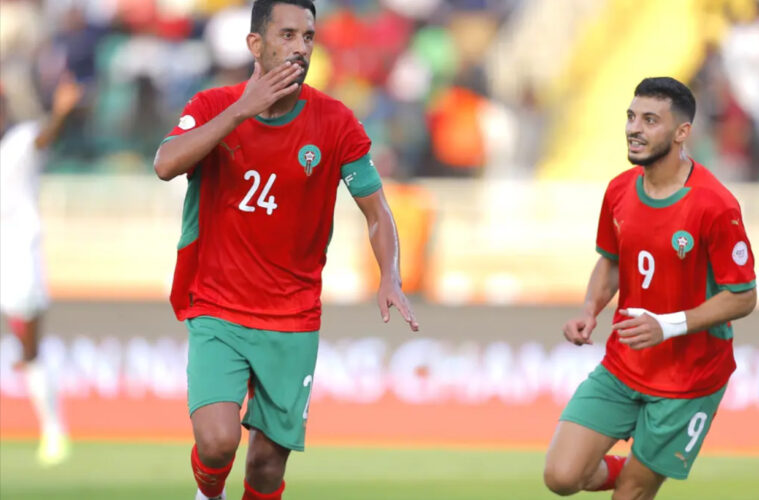
Five-time champions Brazil will have to be at their best. Morocco was a semi-finalist in 2022 and represents a serious threat. Scotland qualified with strength and passion, bringing a fierce European challenge, while debutants Haiti complete a group with incredible geographic and stylistic diversity.
3. Group H: Spain, Saudi Arabia, Uruguay, Cape Verde
While Spain is the top seed, they face Uruguay, a team with deep World Cup history and star quality, and the highly organized Saudi Arabia, who famously defeated Argentina in 2022. The inclusion of debutants Cape Verde ensures a challenging blend of styles.
The three host nations all received varying degrees of difficulty, but benefit from their top seed status:
- Group A (Mexico): Mexico gets a manageable draw, facing two strong Asian and African sides in South Korea and South Africa. Their biggest challenge will be against the winner of UEFA Play-off D (potentially a difficult team like Denmark or Republic of Ireland).
- Group B (Canada): Canada faces the organized challenge of Switzerland and the tricky, defensively-sound Qatar. The winner of UEFA Play-off A (potentially Italy or Wales) could make this group very difficult, but Canada avoids a traditional powerhouse.
- Group D (USA): The US will be satisfied, avoiding major European giants. Paraguay and Australia represent stiff, but beatable, opposition from South America and Asia/Oceania. They should be favorites to top this group.
High-Profile Matchups to Watch
- England vs. Croatia (Group L): A guaranteed blockbuster clash that is a repeat of the 2018 Semi-Final and multiple recent Nations League fixtures.
- Brazil vs. Morocco (Group C): A match between a South American giant and the history-making 2022 semi-finalists from Africa.
- France vs. Norway (Group I): A meeting between one of the favorites and a dangerous, dark-horse European side featuring world-class talent.
The six final spots, decided in the UEFA and FIFA Play-offs in March 2026, add a final layer of suspense to the groups.