

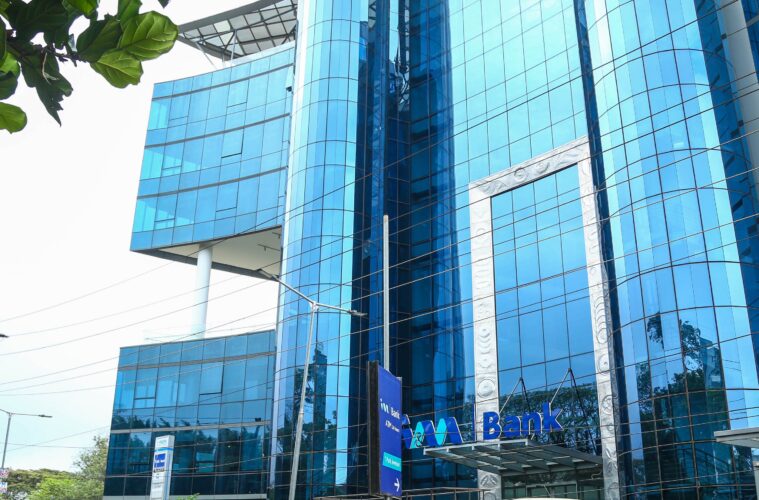
I&M Group PLC has kicked off the 2026 financial year with robust momentum, reporting a Ksh. 5.0 billion net profit for the first quarter ending March 31, 2026. This is a 19% year-on-year increase from the Ksh. 4.2 billion the company reported in the same period in 2025.
According to the company, the rise in profitability was propelled by a massive 42% surge in customer numbers and a regional diversification strategy that cushioned the Group against localized economic shifts.
The Group’s total revenue climbed 24% to Ksh. 16.1 billion, heavily underpinned by a 31% spike in net interest income, which closed at Ksh. 12 billion. Non-interest funded income also saw a steady 7% growth to reach Ksh. 3.8 billion.
I&M Group’s total asset base expanded by 31%, approaching the trillion-shilling milestone at Ksh. 743 billion. This was supported by a 26% growth in customer deposits to Ksh. 512 billion and a 10% expansion of the loan portfolio to Ksh. 323 billion.
I&M Group Q1 2026 financial performance
| Key Financial Metric | Q1 2025 Performance | Q1 2026 Performance | Year-on-Year (YoY) Change |
| Total Revenue | Ksh. 13.0 Billion | Ksh. 16.1 Billion | +24% |
| Net Interest Income | Ksh. 9.2 Billion | Ksh. 12.0 Billion | +31% |
| Non-Interest Income | Ksh. 3.6 Billion | Ksh. 3.8 Billion | +7% |
| Profit Before Tax (PBT) | Ksh. 5.9 Billion | Ksh. 6.4 Billion | +9% |
| Profit After Tax (PAT) | Ksh. 4.2 Billion | Ksh. 5.0 Billion | +19% |
| Total Assets | Ksh. 567 Billion | Ksh. 743 Billion | +31% |
| Customer Deposits | Ksh. 406 Billion | Ksh. 512 Billion | +26% |
| Loan Portfolio | Ksh. 294 Billion | Ksh. 323 Billion | +10% |
A highlight of the quarter was the Group’s enhanced credit risk management. Net Non-Performing Loans (NPLs) declined significantly by 33% to Ksh. 8.4 billion, down from Ksh. 12.5 billion last year. Gross NPLs, on the other hand, dropped from Ksh. 34 billion to Ksh. 32 billion. To future-proof the business against macroeconomic volatility, the Group increased its loan-loss provision buffers by 63%.
Concurrently, the Group’s non-banking ecosystems recorded explosive growth:
- Bancassurance: Revenue grew by 33%, driven by an astonishing 148% explosion in underwritten premiums to Ksh. 3.5 billion.
- Wealth Management: Registered a spectacular 209% revenue growth, closing the quarter at Ksh. 229 million.
Operating expenses rose by 28% as the bank continued to fund its aggressive Mahali Uko, Tuko branch expansion campaign, alongside investments in staff upskilling, talent retention, and brand visibility.
Regional footprint
Subsidiaries outside Kenya contributed 31% of the overall Profit Before Tax, highlighting the strength of its diversified footprint across East Africa and Mauritius. Uganda led the growth charts with a staggering triple-digit bottom-line surge.
| Subsidiary / Country | Q1 2026 Profit Before Tax | YoY Growth | Key Growth Catalysts |
| I&M Bank Kenya | Ksh. 3.3 Billion (Profit After Tax) | +16% | Retail loan segment expansion, government securities, deposit mobilization. |
| I&M Bank Rwanda | Ksh. 850 Million | +14% | Increased localized economic and private sector activity. |
| I&M Bank Tanzania | Ksh. 469 Million | +45% | Robust asset growth and strong trade finance revenues. |
| I&M Bank Uganda | Ksh. 304 Million | +169% | Surge in both net interest income and non-funded income; assets grew to UGX 1.6T. |
| Bank One (Mauritius) | Ksh. 444 Million | -6% | Resilient performance despite slight dip; total assets grew by 14%. |
I&M Bank Kenya remained the Group’s anchor unit, posting a 16% growth in PAT to Ksh. 3.3 billion. Driven by the open market deployment of 12 new branches since Q1 2025, the Kenyan unit successfully grew customer deposits by 25%.
The Kenyan subsidiary also made substantial strides in environmental, social, and governance (ESG) targets. During the quarter, the bank secured a USD 30 million green lending portfolio in partnership with the Swedish International Development Cooperation Agency (SIDA) to fund climate-aligned projects across the country. Additionally, it teamed up with B Lab Africa to launch the Resilient Sustainable Business (RSB) programme, aimed at instilling sustainable corporate practices among local SMEs.