

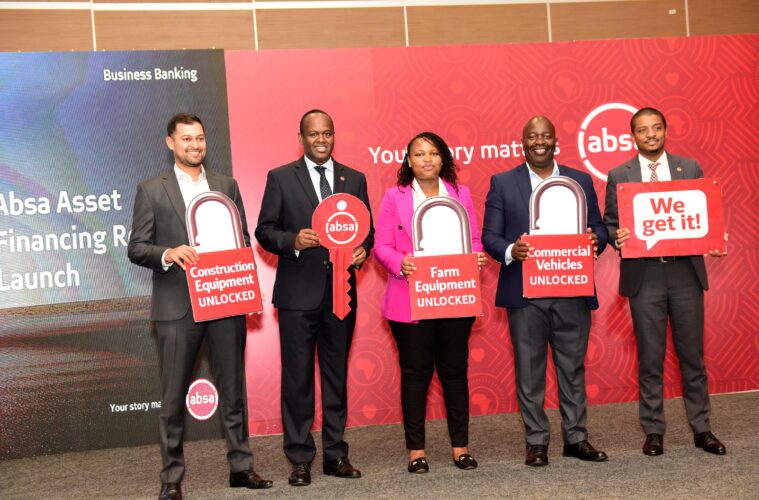
Absa Bank Kenya has officially launched a revamped asset financing proposition, committing Ksh. 100 billion over the next three years to empower businesses and individuals across the country.
The enhanced offering, dubbed ABF 2.0, is designed to dismantle traditional barriers to credit by improving speed, simplicity, and predictability. The initiative targets critical sectors of the Kenyan economy, including manufacturing, healthcare, education, infrastructure, and trade and logistics.
The bank has slashed the customer journey from 13 pre-approval steps down to just six. Key processing improvements include:
- Onboarding to Approval: Reduced from 10 days to 48 hours.
- Approval to Disbursement: Now completed within 72 hours.
“ABF 2.0 is a direct response to what our customers and partners have told us they need,” said Renato D’souza, Business Banking Director at Absa Bank Kenya. “By simplifying processes and investing in specialist capability, we are making asset acquisition easier to navigate. It is a practical demonstration of our ‘We Get It’ mindset.”
To support long-term investment, the bank has extended loan tenors up to 84 months (7 years) for select asset classes, with financing options reaching up to 100%.
Targeted asset categories include:
- Education: School buses.
- Transport: New and imported personal vehicles (including grey market imports).
- Healthcare: Medical equipment for hospitals, clinics, and laboratories.
- Sustainability & Industry: Solar equipment, agricultural machinery, and manufacturing hardware.
To ensure the Ksh. 100 billion fund is deployed effectively, Absa has established a dedicated Asset Financing Centre. This hub integrates specialist expertise with sector-aligned credit assessment teams to provide customers with clearer guidance and a more coordinated execution experience.
Speaking at the launch event in Nairobi, Abdi Mohamed, Managing Director and CEO of Absa Bank Kenya, emphasized that the shift is about more than just capital, it’s about impact.
“By ensuring capital moves more efficiently to where it is most productive, we are enabling individuals and businesses to invest, expand capacity, and compete with greater certainty,” Mohamed stated. “This is how we translate financing into real and measurable economic impact.”