

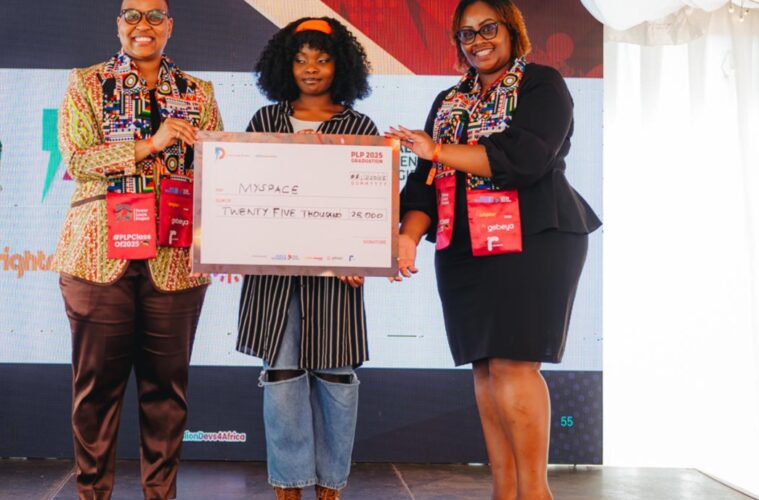
The Power Learn Project Africa (PLP) announced that 9,000 young software developers have successfully completed their program. This latest cohort brings the total number of young Africans trained by PLP to over 20,000.
The graduation coincided with the conclusion of a regional hackathon, hosted in partnership with UN Women East & Southern Africa Regional Office (ESARO) and the African Girls Can Code Initiative (AGCCI), as part of the global 16 Days of Activism Against Gender-Based Violence.
Innovators from Kenya, Nigeria, Rwanda, South Africa, and Mozambique presented solutions to combat the escalating crisis of Technology-Facilitated Violence Against Women and Girls (TFVAWG).
Anna Mutavati, Regional Director for UN Women ESARO, highlighted the urgency: “With one in every three women facing online violence—from cyberbullying to deepfakes—they are effectively being kicked out of digital spaces. This partnership is a wake-up call. We must invest in youth-led innovation to build a safe, inclusive tech pipeline, and transform the 5-10% prevalence of women in AI development into a true force for African growth.”
UN Women reports that TFVAWG, which includes online harassment, stalking, and impersonation, is significantly underreported across Africa. Ms. Mutavati called on African governments to update legislation and the private sector to scale up youth-led innovations to ensure digital inclusion goes hand-in-hand with safety.
The hackathon finalists showcased innovative, homegrown solutions designed to combat TFVAWG, focusing on secure reporting and evidence-gathering:
- ImaraZero – User Interface Digital Bodyguard: Uses multi-modal AI to analyze voice notes, screenshots, and text for threats, offering advice or escalating to authorities across seven African countries. The team is seeking $50,000 to acquire API licenses and expand.
- Safeguard: Leverages Blockchain and AI to create a tamper-proof digital evidence vault for online harassment and an intelligence engine for repeat offender profiling. The team is seeking $50,000 for mobile app development and legal compliance.
- EveShield: A panic button app that uses geolocation to notify emergency contacts, bystanders, and authorities, while providing access to mental health and legal aid resources. The team is requesting $3,000 for viability scaling and city pilot rollouts.
Mumbi Ndung’u, Executive Director of PLP, reinforced the organization’s commitment to closing the technology talent gap and lowering the cost of talent for African businesses.
“Africa is losing its top engineering talent to international firms offering three times the local pay,” Ndung’u stated. “While those opportunities are welcome, we must also empower young people building within local ecosystems to ensure we can create globally competitive local products and solutions.”
In a direct response to the massive gender imbalance in STEM, PLP has dedicated 40% of its 16-week software development scholarships to women.