

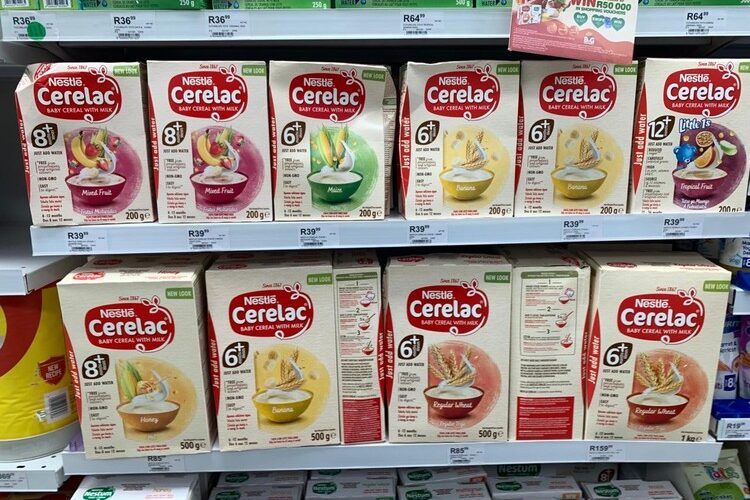
Swiss food behemoth Nestlé is under intense pressure and accused of dangerous “double standards” after an investigation found that its infant cereals sold across Africa contain high amounts of added sugar, with a product on shelves in Kenya containing the highest level detected globally.
The findings, released by the Swiss NGO Public Eye, allege that Nestlé is prioritizing profit over the health of African children by flouting the strict, low-sugar health standards it maintains for equivalent products sold in Europe.
The investigation focused on Nestlé’s popular Cerelac infant cereals:
- Global High: A Cerelac product intended for six-month-old babies sold in Kenya was found to contain 7.5 grams of added sugar per serving, which is the highest quantity detected in the study and amounts to nearly two sugar cubes.
- African Average: Across the 20 African countries surveyed, 90 percent of the nearly 100 Cerelac samples contained added sugar, averaging close to 6 grams per serving.
- The Contrast: This is in stark contrast to Nestlé’s main baby cereal brands in its home country of Switzerland, and in key European markets like the UK and Germany, which are sold with zero added sugar.
The practice directly contravenes 2022 guidelines from the World Health Organization (WHO), which explicitly warns against added sugar in baby foods.
- Obesity Risk: Early sugar exposure can create a life-long preference for sugary products and is a major factor driving childhood obesity, which is a rising concern in Kenya and across the continent.
- The “Double Burden”: The WHO notes that Africa faces a “double burden” of malnutrition and obesity, with the number of overweight children under five nearly doubling since 1990.
Nineteen Africa-based civil society and consumer protection groups have collectively signed an open letter to Nestlé CEO Philipp Navratil, condemning the findings and demanding immediate action:
- Ethical Call: “If added sugar is not suitable for Swiss and European children, it is not suitable for children in Africa and beyond,” the letter stated, emphasizing that “All babies have an equal right to healthy nutrition – regardless of their nationality or skin color.”
- Accusation of Profit Motive: The groups firmly accused the company of “deliberately putting the health of African babies at risk for profit,” and acting as “the architects of a preventable public health catastrophe.”
- Demand: They demanded that Nestlé immediately issue a public apology and stop adding sugar to all its baby foods sold in Africa.
Read the report HERE.