

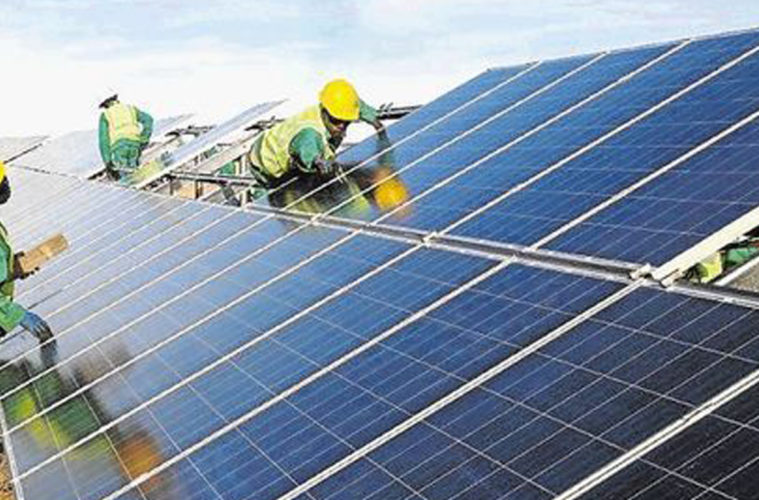
The conversation around industrial manufacturing is shifting rapidly. No longer is it just about scale and output; today, the metrics of success are efficiency, resilience, and sustainability. This reality took center stage at the Clean Energy Conference & Expo held at the Sarit Expo Centre.
Under the timely theme, Industrial Decarbonization Through Clean Technology Adoption, leaders from government, private sector, and international development agencies gathered to address a pressing double-edged sword: navigating volatile global fuel prices while aggressively cutting carbon footprints.
Organized by the Kenya Association of Manufacturers (KAM) in partnership with the United Nations Industrial Development Organization (UNIDO), the event marked a pivotal milestone: the official launch of the Industrial Clean Tech Platform (ICTP).
The ICTP is designed as a practical ecosystem hub to help manufacturers overcome traditional barriers to green technology. It bridges the gap between industrial players and:
- Advanced clean technologies
- Affordable green financing solutions
- Targeted technical expertise
This initiative arrives at a critical juncture. Manufacturers are currently grappling with severe operational headwinds, from fluctuating global oil markets and foreign exchange pressures to escalating electricity bills and stricter international eco-standards reshaping global trade.
For a long time, green initiatives were viewed by some as corporate luxury. Today, they are a baseline strategy for survival.
“Industrial decarbonization must not only be viewed as an environmental agenda, but as a practical business strategy that can lower operational costs, strengthen resilience, create green jobs, and improve market competitiveness.” Tobias Alando, KAM Chief Executive
Alando emphasized that global energy volatility directly impacts local industrial competitiveness. Unpredictable fuel prices and supply chain bottlenecks mean that energy security and economic survival are now completely intertwined.
Echoing these remarks, Mr. Bernard Bosuben, Assistant Director of Industries (representing the Principal Secretary, State Department for Industry), called for a unified front. He noted that sustainable industrialization requires “coordinated cooperation” across government, academia, and development partners, while praising manufacturers who are already proving that environmental stewardship and profitability can go hand in hand.
Kenya is uniquely positioned to lead the green industrial revolution, boasting an exceptionally clean grid. Data shared by Engineer Boniface Kinyanjui, Acting Director of Electricity & Renewable Energy at the Energy and Petroleum Regulatory Authority (EPRA), highlights Kenya’s clean energy strengths:
- Renewable Dominance: Over 80% of electricity generated in Kenya comes from renewable sources.
- The Geothermal Backbone: Geothermal energy alone accounts for roughly 40% of the country’s grid supply.
- Decentralized Power: Captive solar generation contributes 327 MW, while bioenergy adds 164 MW.
- Proven Efficiency: Companies implementing standard energy audits are unlocking 20% to 30% in energy savings.
To further cushion the industry, the government is rolling out supportive frameworks, including Time of Use (ToU) tariffs, dedicated e-mobility tariffs, green hydrogen guidelines, and Battery Energy Storage Systems (BESS) to optimize reliability.
Despite these advances, the cost of traditional energy reliance remains unsustainably high for certain sectors. Tally Einav, UNIDO Representative to Kenya, offered a stark reality check using one of the country’s economic pillars:
In Kenya’s tea sector, energy accounts for a staggering 25% to 35% of total production costs. Furthermore, the sector consumes approximately 1.3 million tonnes of fuelwood annually—a metric that underscores the absolute urgency for rapid, clean technology intervention.
The Clean Energy Conference is just the catalyst for a broader week of sustainable industrial action.
- Happening Today (Thursday, May 21, 2026): The momentum shifts to the Loop Forum Kenya, focusing heavily on circular economy solutions, waste-to-value business models, and smarter resource management.
- Tomorrow (Friday, May 22, 2026): The week concludes with the prestigious Energy Management Awards (EMA), celebrating the pioneering manufacturers and institutions setting benchmarks in energy efficiency and green production.