

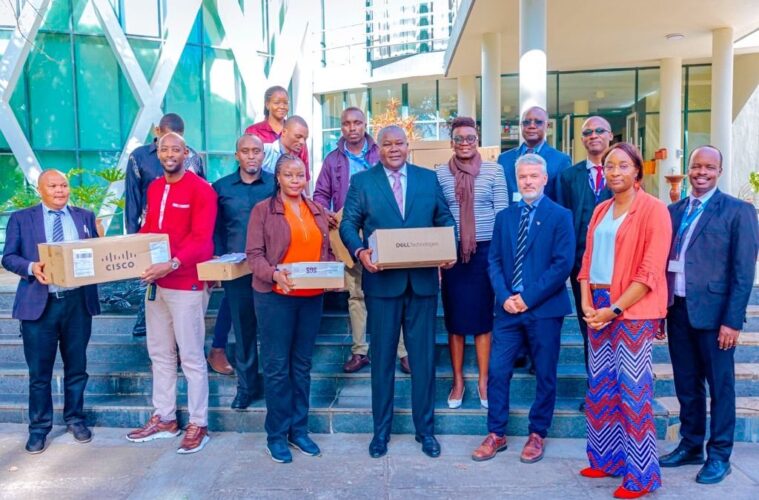
The German government has delivered ICT infrastructure valued at €205,000 to the East African Community (EAC) Secretariat.
The technical equipment was handed over at the EAC Headquarters in Arusha by the German development agency Deutsche Gesellschaft für Internationale Zusammenarbeit (GIZ). It is part of the ongoing Digitalisation for East African Trade and Integration (DIGEAT) Project. The initiative is funded by Germany’s Federal Ministry for Economic Cooperation and Development (BMZ).
According to the EAC Secretariat, the new infrastructure will enhance the organization’s institutional autonomy by boosting its capability to independently host, scale, and secure critical regional systems. The technical package features primary and disaster recovery servers, enterprise-grade storage networks, automated backup appliances, advanced network switches, Web Application Firewall (WAF) cybersecurity technology, and Windows Server Datacentre licenses.
A primary beneficiary of the new infrastructure is the EAC Mutual Recognition Agreement (MRA) Digital Platform. Recognized as Africa’s first regional mechanism of its kind, the digital platform enables professional engineers across member nations to digitally register, verify credentials, and apply for recognition across partner states.
Speaking during the formal handover ceremony, EAC Secretary General Ambassador Stephen Mbundi described the infrastructure upgrade as a pivotal milestone in the region’s broader digital transformation journey.
“This handover represents more than a transfer of equipment; it is a transfer of ownership and capability,” Ambassador Mbundi stated. “With this investment, the EAC Secretariat is now firmly positioned as a custodian of regional digital public infrastructure, capable of facilitating secure, cross-border digital services for East African professionals.”
GIZ-EAC Cluster Coordinator Björn Richter reiterated Germany’s commitment to advancing regional integration through digital innovation. Richter noted that the upgrade reflects the growing cooperation between Germany and the economic bloc, emphasizing a shared agenda to create tangible, positive impacts for East African citizens by improving connectivity and professional mobility.
The overhaul comes as regional bodies increasingly turn to Digital Public Infrastructure (DPI) to facilitate secure trade, cross-border investment, and economic collaboration. The EAC’s modernization efforts closely track continental blue-prints, such as the digital economy strategies outlined under the African Continental Free Trade Area (AfCFTA).
To date, the EAC has successfully finalized mutual recognition agreements covering engineering, architecture, accountancy, and veterinary services, with framework negotiations for legal professionals currently in advanced stages.