

Kenyan banks have announced the adoption of the Revised Risk-Based Credit Pricing Model (RBCPM), a regulatory framework established by the Central Bank of Kenya (CBK). This move standardizes the methodology for setting variable interest rates on Kenya Shilling loans.
The implementation of the RBCPM follows extensive consultations that began in April 2025, during which respondents pushed for benchmarks tied to interbank rates, in line with global standards like SOFR (US) and SONIA (UK).
The Kenya Bankers Association (KBA) has stated that lenders agreed to implement the revised model, which is intended to overhaul how loans are benchmarked and priced in the market. The shift is aimed at achieving:
- Fairer loan pricing, particularly by rewarding creditworthy borrowers.
- Sharpened competition among lenders.
- Expanded access to credit for households and businesses.
The CBK, which issued an August directive introducing the Kenya Shilling Overnight Interbank Average (KESONIA) as the base rate, expects the framework to improve transparency and strengthen the link between monetary policy and lending rates. Lenders view the change not just as compliance, but as a chance to ensure credit reaches more sectors of the economy.
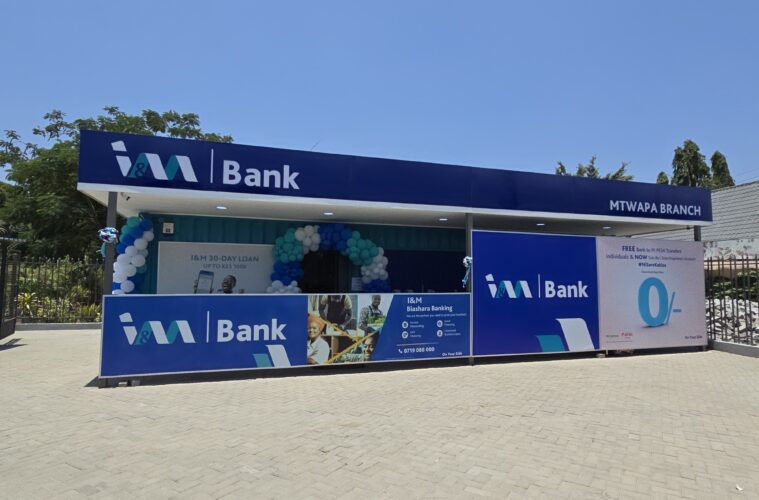
Effective December 1, 2025, all new Kenya-Shilling variable rate loans and advances offered by I&M Bank and its peers will be priced under the revised model.
The new lending rate will adhere to a two-component structure: a Common Reference Rate plus a Premium (“K”).
1. Common Reference Rate Variation
The banking industry is adopting two distinct reference rates:
- Central Bank Rate (CBR): I&M Bank and Equity Bank (Kenya) have stated they will use the Central Bank Rate (CBR), as set and published by the Monetary Policy Committee (MPC) of the Central Bank of Kenya, as their common reference rate.
- KESONIA Rate: Other institutions, including Co-operative Bank, Kingdom Bank, and Standard Chartered Bank, have adopted the Kenya Shilling Overnight Interbank Average (KESONIA) rate, published by the CBK, as their Common Reference Rate. Co-operative Bank states that the applicable KESONIA Reference Rate for each month will be posted on its website and applicable media platforms. CBK will publish the daily compounded KESONIA rate and index at 9 a.m..
2. Premium (“K”)
This component is added to the reference rate and reflects the customer-specific risk profile. Equity Bank specifies that the premium (K) incorporates customer credit risk, shareholders’ return, costs associated with lending, and other relevant costs. The premium will be disclosed to the customer as required by CBK guidelines.
Transitioning Existing Loan Facilities
All existing Kenya-Shilling variable rate loans and advances issued before December 1, 2025, will transition to the new framework by a mandatory deadline.
Existing variable rate loans across the implementing banks will fully transition to the revised RBCPM framework by February 28, 2026, in line with CBK’s directives.
Exclusions to the Change
The following facilities will generally not be affected by the transition to the RBCPM framework:
- Foreign currency facilities
- Fixed-rate loan facilities
- Flat-rate loan facilities
I&M Bank, alongside its industry peers, emphasized its dedication to upholding the principles of transparency and treating customers fairly (TCF) throughout this process. Banks must disclose monthly lending rates, premiums, fees, and the Annual Percentage Rate (APR) on the Total Cost of Credit website. All applicable fees, charges, and the total cost of credit, as agreed upon, will be fully disclosed to customers in their Offer Letters and loan Terms & Conditions.