

Despite decades of advocacy and a visible increase in female journalists entering the field, a landmark report released by the Association of Media Women in Kenya (AMWIK) reveals that women in media continue to face systemic barriers, precarious working conditions, and a staggering lack of representation in leadership.
The report, titled The State of Women in Media in Kenya (2026), was officially launched on April 23, 2026, during the Women in Media Conference in Nairobi. It paints a sobering picture of an industry where women are often relegated to the fringes of job security and excluded from the highest levels of decision-making.
One of the report’s most alarming findings is the high level of professional vulnerability among female journalists. According to the data, a massive 59.5% of women in the media industry are in vulnerable roles, working as interns, freelancers, or correspondents with no job security.
Only 14% of women journalists hold permanent, full-time positions, while 26.2% are employed on fixed-term contracts. This lack of stability not only affects the financial well-being of women but also limits their ability to pursue long-term investigative projects or rise through the ranks.
The report highlights a leaky pipeline where women enter the profession in large numbers but disappear before reaching management. While women dominate entry-level positions, the numbers plummet at the top:
- Only 3.7% of women in media have reached the level of Managing Editor or Media Manager.
- A mere 2.8% of media outlets in Kenya are owned by women.
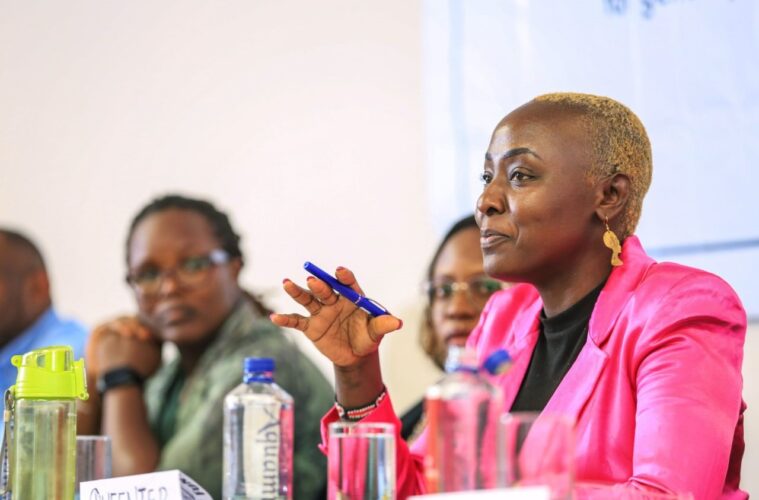
“Women’s journey in media is still marked by persistent structural and systemic barriers that limit full participation,” said Queenter Mbori, Executive Director of AMWIK. “Addressing these disparities is critical not only for achieving gender equality but for strengthening media credibility and democratic accountability.”
The research also identifies where women are most active within the sector. Radio remains the primary entry point, employing 31.4% of the female workforce. Print and digital platforms each account for 11%, while television, often perceived as a high-visibility medium, employs only 8.6% of women journalists.
Beyond the statistics on employment, the report dives into the lived experiences of women in newsrooms. Harassment, both offline and online, remains a significant deterrent. Technology-facilitated gender-based violence (TFGBV) has emerged as a modern threat, with digital harassment often used to silence female voices and push them out of the profession.
Additionally, the report cites a lack of institutional support for work-life balance, noting that limited maternity benefits and high levels of mental stress frequently force women to choose between their careers and their families.
AMWIK concludes the report with a series of urgent recommendations for media houses, the government, and industry stakeholders:
- Enforce Gender Policies: Media organizations must move beyond “paper policies” and actively implement gender-responsive hiring and promotion practices.
- Safety Mechanisms: Newsrooms must establish clear protocols for reporting and addressing sexual harassment and digital abuse.
- Investment in Leadership: There is a need for deliberate mentorship and leadership development programs to bridge the gap between entry-level roles and management.
- Pay Equity: Regular audits are required to address the persistent pay gap between male and female journalists in similar roles.
The AMWIK report can be downloaded HERE.