

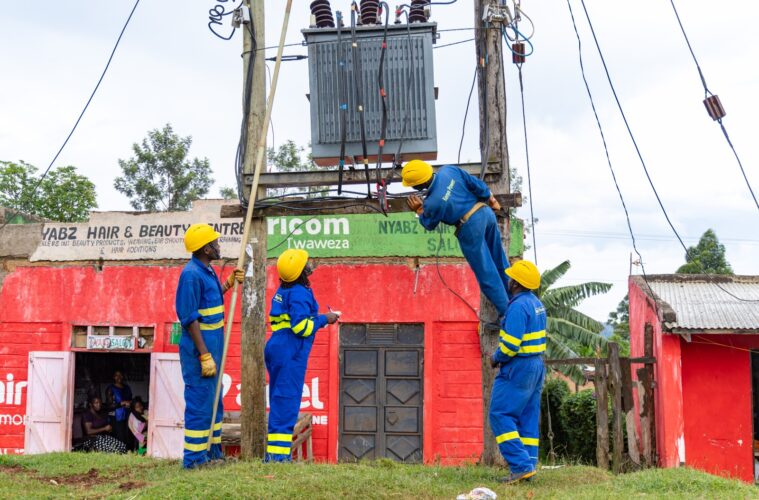
Kenya Power has recorded a new all-time high in the country’s electricity peak demand, reaching 2,439.06 Megawatts (MW). This milestone underscores the accelerating growth in electricity uptake among commercial and domestic consumers.
The new peak, attained on December 4, 2025, surpasses the previous record of 2,418.77 MW set just weeks earlier on November 18, 2025.
The continuous upward trend in demand is attributed to several factors:
- Increased Electricity Connections: A growing customer base, with 401,848 new customers added during the year ended June 2025.
- Growth in Industrial Activities: Industrial customers accounted for over half of Kenya Power’s total unit sales in the last financial year.
- System Stabilization: Strategic investments in stabilizing the National Grid and timely completion of key network reinforcement projects have enhanced power supply reliability and redundancy.
Commenting on the achievement, Kenya Power’s Managing Director & CEO, Dr. (Eng.) Joseph Siror, noted: “We are delighted to witness this energy demand growth, which is a direct reflection of increased domestic and commercial activities across the country. Our central role in powering industry and economic growth is clear, and the priority now shifts to the generation sector to help secure our reserve margins.”
Dr. Siror also highlighted the impact of improved operational efficiency: “New connections, rising industrial activities, and improved system efficiency have all contributed to this increased electricity usage. The 401,848 new customers connected in the year ended June 2025 alone contributed 203 GWh in new electricity sales.”
Kenya Power’s focus on operational efficiency has yielded results:
1. System losses reduction
Total system losses improved from 23.16% to 21.21%. This was achieved through interventions such as the accelerated rollout of smart meters, replacement of faulty meters, and targeted feeder upgrades.
2. Service reliability
The Company has also improved key reliability indices:
- System Average Interruption Duration Index (SAIDI) improved from 120.6 hours to 113 hours.
- System Average Interruption Frequency Index (SAIFI) improved from 47.00 to 44.07.