

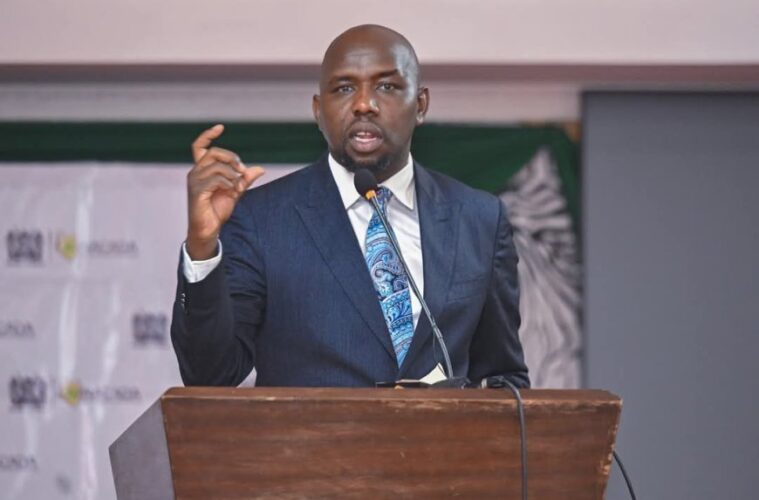
The Ministry of Interior and National Administration has officially launched a nationwide call for public participation regarding the newly developed National Forensic Science Bill 2026. This legislative effort, spearheaded by a Multi-Agency Committee in collaboration with the Government Chemist Department, aims to overhaul and modernize forensic services and practices across the country.
The proposed Bill is designed to provide a robust legal framework for forensic laboratory services, ensuring that forensic science practice in Kenya meets international standards. By streamlining how forensic evidence is gathered, analyzed, and utilized, the government hopes to enhance the efficiency of the justice system and bolster national security.
The Ministry has emphasized that the process is inclusive, calling upon stakeholders and all members of the public to review the draft and share their insights. The government is accepting feedback through several channels to ensure maximum accessibility:
- Digital Submissions: Memoranda can be emailed to nationalforensicsciencebill@gmail.com or sent via WhatsApp to +254 140 967 773.
- Physical Submissions: Hard copies, following the template provided on the Ministry’s website, can be delivered to the Principal Secretary at Harambee House, Nairobi.
- Deadline: All submissions must be received on or before May 15, 2026.
The full draft of the Bill is currently available for public viewing on the Ministry’s official website at www.interior.go.ke.
In addition to written submissions, the State Department for Internal Security and National Administration will conduct a series of physical town hall meetings across the country. These forums are scheduled to begin at 9:00 am on their respective dates as below:
- Nairobi & Central: Forums kick off in Nairobi City on May 7, covering Nairobi, Kiambu, and Kajiado across three venues (County Hall, Makadara Hall, and Dagoreti Hall). The Nyeri regional forum at Ruring’u follows on May 11.
- Western & Nyanza: Residents in the Kisumu region can participate on May 11 at Ofafa Hall, while the Kakamega forum is set for May 13 at the County Social Hall.
- Rift Valley: Sessions will be held in Eldoret (May 11), Nakuru (May 13), and Kapenguria (May 15) to cover the expansive region from Uasin Gishu to Turkana.
- Eastern & Northern: Forums are scheduled for Isiolo and Machakos on May 11, followed by Embu on May 13.
- Coastal & North Eastern: The Mombasa forum will take place at the Kenya School of Government on May 13, while Garissa and Malindi (Kilifi) will host their final sessions on May 15.
Summary of the National Forensic Science Bill 2026
1. Establishment of a Regulatory Framework
The primary goal is to create a structured legal environment for forensic science. This includes establishing official standards for how forensic evidence is collected, handled, and analyzed to ensure it meets the rigorous demands of the judicial system.
2. Professionalization of Forensic Services
The Bill aims to regulate the conduct and qualifications of forensic professionals. By setting high professional standards, the government intends to ensure that only qualified experts provide forensic evidence, thereby reducing the margin of error in criminal proceedings.
3. Modernization of Laboratory Services
The legislation provides for the modernization of forensic laboratory services across the country. This includes the integration of advanced technologies and the harmonization of laboratory procedures between the Government Chemist and other investigative bodies like the Directorate of Criminal Investigations (DCI).
4. Enhancing the Justice System
By providing more reliable and scientifically sound evidence, the Bill is expected to:
- Speed up trials: Reducing the backlog of cases caused by delayed forensic reports.
- Improve Conviction Rates: Ensuring that evidence presented in court is incontrovertible.
- Prevent Wrongful Convictions: Utilizing DNA and other high-precision forensic tools to ensure the right individuals are held accountable.
5. Coordination and Oversight
The Bill proposes a multi-agency approach to forensic science, ensuring better coordination between the Ministry of Interior, the Government Chemist, and national security organs. It also establishes oversight mechanisms to monitor the integrity of forensic practices nationwide.