


The digital landscape in Kenya has officially matured from a hobbyist’s playground into a billion-shilling industry. According to the latest flagship report by Odipo Dev, titled Decoding Kenya’s Creator Economy, Kenyan influencers earned an estimated Ksh. 1.07 billion in 2025.
However, beneath this ten-figure headline lies a complex story of attention vs. income, where billions of views do not always translate into bank balances, and platform choice determines a creator’s financial survival.
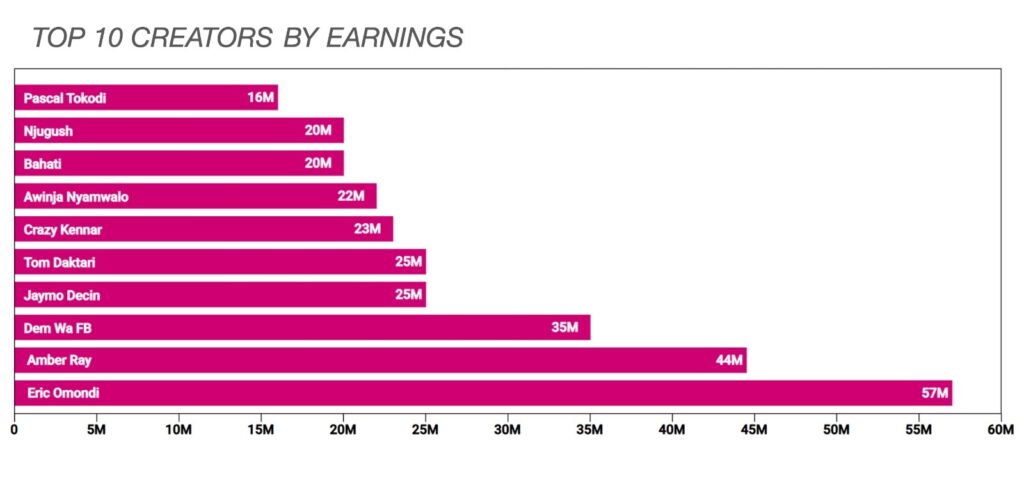
While the industry is growing, the spoils are heavily concentrated. The report reveals that the top 10 Kenyan influencers commanded Ksh. 296.2 million, nearly 30% of the entire market’s payout.
Odipo Dev’s analysis suggests a Power Law is at play: the top 20 creators capture approximately 40% of the total market share. These high earners aren’t necessarily the newest viral sensations; rather, they are often established creators who have leveraged industry experience and long-term brand relationships to secure high-value partnerships.
While large brands offer the most lucrative individual deals (with high-end sponsored posts reaching up to Ksh. 500,000), they are not the primary drivers of volume.
The report finds that SMEs are anchoring roughly 80% of the creator economy. These smaller businesses are increasingly bypasssing traditional media to partner with creators, allowing them to compete for consumer attention in ways previously reserved for companies with massive advertising budgets.
Top categories by brand attention:
- Beauty & Personal Care (Leading with 174 active companies)
- Food & Beverage
- Telco & Financial Services
The most striking finding in the Odipo Dev report is the monetization gap between social media platforms.
- Instagram: The Gold Mine. Instagram remains the premier platform for monetization. Top creators successfully converted 40.8% of their views into paid content.
- TikTok: The Attention Monster. Despite dominating raw attention and cultural trends, TikTok is significantly undercapitalized. Creators here average a mere 12.2% monetization rate.
- Facebook: The Middle Ground. Sitting at a 21.2% conversion rate, Facebook continues to provide a steady mix of organic reach and brand deals for a select group of veteran creators.
The report pulls no punches regarding the structural failures of global tech giants in the local market. Outside of YouTube’s transparent 55% ad-revenue share, most platforms do not consistently pay Kenyan creators for the cultural and economic value they generate.
Meta (Facebook/Instagram) and TikTok have largely limited their creator compensation programs to Western markets or issued rewards in sporadic, unsustainable ways. This leaves Kenyan creators entirely dependent on their own off-platform hustle, manually negotiating deals with brands to keep their businesses afloat.
For brands looking to enter the space, timing is everything. Odipo Dev found that influencer activity is heavily concentrated in the second half of the year, with Quarter 3 (Q3) being the busiest window for sponsored content.
Read the Decoding Kenya’s Creator Economy report by Odipo Dev HERE.