

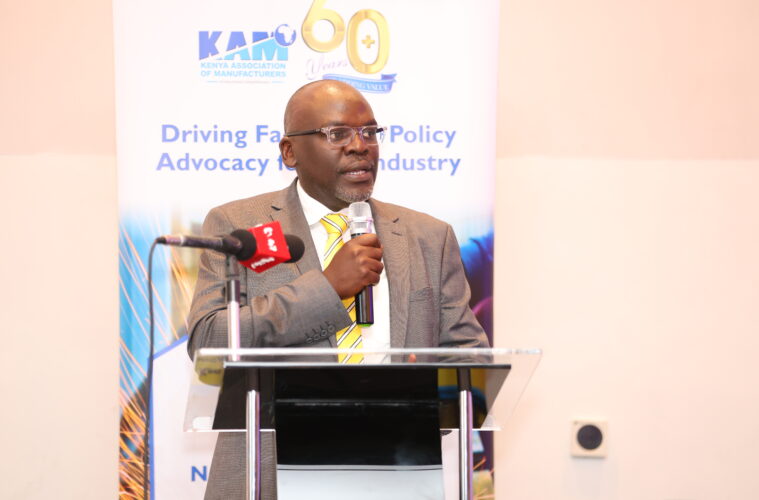
The Kenya Association of Manufacturers (KAM) has officially unveiled the Manufacturing Priority Agenda 2026 (MPA 2026). It is a strategic designed to pivot the nation toward an export-led economy and resolve the structural bottlenecks stifling industrial growth.
The MPA 2026 goal is to elevate manufacturing’s GDP contribution to 20% by 2030, increase exports to 30%, and attract $10 billion in foreign direct investment (FDI). The current GDP contribution by the sector is 7.3%.
KAM Board Vice Chair, Hitesh Mediratta, noted that Kenya must take a cue from these nations. “Countries that prioritize manufacturing reap tangible economic benefits,” Mediratta said. He highlighted that in 2024, Kenya exported goods worth over KSh 1.1 trillion, with 38.3% destined for African markets—underscoring the massive potential of the AfCFTA and EAC frameworks.
Despite the optimism, the sector faces persistent drags that the MPA 2026 aims to address:
- High Production Costs: Energy and logistics remains expensive compared to regional rivals.
- Regulatory Burdens: Overlapping tax regimes and bureaucratic red tape.
- Liquidity Issues: Delayed VAT refunds continue to strain the cash flow of local manufacturers.
- Trade Barriers: Non-tariff barriers that hinder the flow of goods within the continent.
The four pillars of MPA 2026
KAM Chief Executive Tobias Alando described the agenda not merely as a document, but as a structured articulation of Kenya’s economic transformation. The strategy is anchored on four critical pillars:
| Pillar | Focus Area |
| Global Competitiveness | Reducing the cost of doing business and improving ease of entry. |
| Export-Led Industrialization | Leveraging AfCFTA to position Kenya as a regional hub. |
| SME Development | Integrating smaller players into the formal value chain. |
| Agriculture for Industry | Strengthening the link between farming and factory processing. |
Find the Manufacturing Priority Agenda 2026 HERE.