

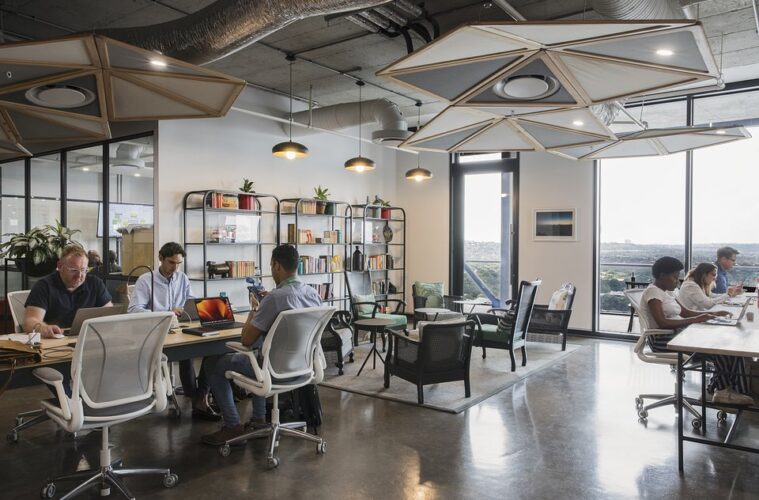
Kofisi has announced the closure of its Karen and Upper Hill branches following a net loss of Ksh. 417 million for the 2024 fiscal year.
The closure of the Karen location is particularly notable as it was a cornerstone of the company’s 2019 rebranding and expansion. Opened in October 2019, the Karen site was designed to cater to the “affluent suburbs” of Nairobi, targeting the growing need for professional workspaces closer to residential areas to reduce commute times. At its launch, CEO Michael Aldridge emphasized that Karen’s infrastructure development made it a prime spot for high-end collaborative design. However, five years later, shifting corporate needs have seen the firm pivot back toward larger, centralized hubs.
Despite the Ksh. 417 million loss reported in 2024, Kofisi’s long-term outlook remains aggressive. In September 2025, the company secured a $10.5 million (approx. KSh 1.3 billion) investment from the London-based Falco Group. This capital injection is part of a larger $35 million project financing raise aimed at accelerating Kofisi’s footprint across the continent.
The company is moving away from smaller satellite offices to invest in massive “landmark” centers. A prime example is the recently opened KOFISI Kaskazi in Westlands—a 10-floor, 90,000 sq. ft. facility that integrates high-end office suites with a gym, rooftop terrace, and a sustainability-driven restaurant.
Kofisi entered a strategic partnership with South African workspace company Workshop17 in May 2024. This collaboration created the largest independent network of serviced offices in Africa, granting members access to a combined 22 locations across seven countries, including South Africa, Mauritius, Nigeria, Tanzania, and Morocco.
The decision to exit Karen and Upper Hill reflects a significant evolution in the Nairobi real estate market:
- Kofisi is doubling down on “Grade A+” spaces that offer more than just desks. By focusing on Westlands and Riverside, they are targeting high-tier clients (such as Google, Amazon, and Bolt) who demand specialized amenities like media studios, wellness centers, and “hotel-style” hospitality.
- Consolidating into larger hubs like KOFISI Square (50,000 sq. ft.) allows for better economies of scale compared to maintaining smaller suburban branches.
- While Karen was once the primary suburban alternative, the Nairobi Expressway has made central hubs like Westlands more accessible, reducing the “location premium” once held by suburban-only offices.
Kofisi remains Kenya’s largest provider of hospitality-led workspaces, with a total Nairobi footprint still spanning nearly 300,000 sq. ft. Kofisi aims to reach 1 million square feet of premium workspace across Africa, with upcoming launches slated for Kigali and Casablanca.