

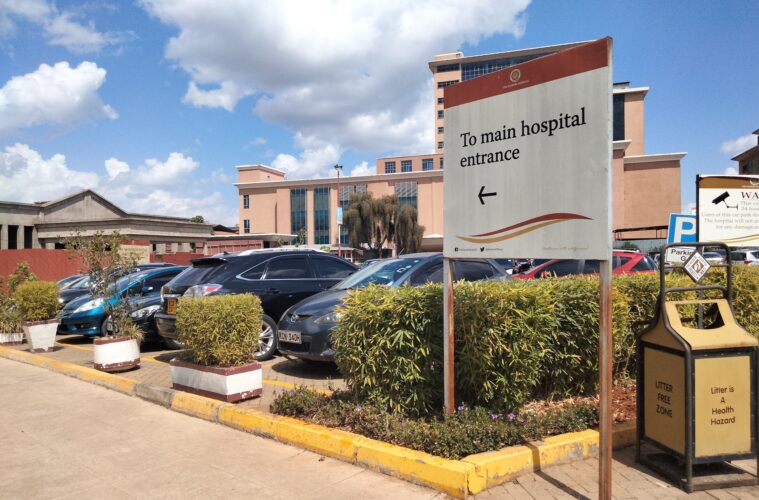
The High Court of Kenya has once again declared that the detention of patients over unsettled medical bills is unconstitutional.
In a ruling delivered on April 28, 2026, Justice R.E. Aburili of the Constitutional and Human Rights Division ordered The Nairobi Hospital to immediately release a patient who had been held for weeks following life-saving surgery.
The legal battle began when Stephen Ndwaru Gicheru underwent open-heart surgery at the facility. Although he was medically cleared for discharge on March 27, 2026, the hospital refused to let him leave. The impasse arose after Mr. Gicheru’s insurance provider declined to settle the full balance, leaving the patient with a substantial bill.
Despite the family’s payment of Ksh 1,000,000 and a formal commitment to pay the remaining balance, the hospital remained firm, effectively keeping Mr. Gicheru in a hospital room where additional costs continued to accrue daily.
Representing the petitioner, Mr. Odiyo argued that the hospital was using his client as “human collateral.” Justice Aburili agreed, describing the practice of using detention to enforce a debt as an affront to human dignity.
In her analysis, the Judge drew on both the Constitution of Kenya (2010) and international treaties like the ICCPR, stating: “No one shall be imprisoned merely on the ground of inability to fulfill a contractual obligation. Any form of detention not authorized by law that seeks to procure performance of contractual debt is a violation of the right to liberty.”
The court further noted that the hospital’s actions were counterproductive. By refusing to discharge the patient, the hospital was forcing the family into deeper economic hardship while preventing the patient from receiving the necessary post-operative recovery care at home.
Justice Aburili expressed frustration that hospitals continue to engage in self-help mechanisms despite numerous previous court rulings outlawing the practice. She noted that this is a well-trodden legal path and that hospitals are wasting judicial resources by ignoring settled law.
While acknowledging that hospitals have a right to be paid for their services, the Judge emphasized that they must use lawful debt recovery methods, such as civil litigation or security agreements, rather than depriving citizens of their physical freedom.
The High Court issued the following mandatory orders:
- Immediate Release: The Nairobi Hospital must release Mr. Gicheru to his family immediately.
- Access to Records: The hospital is required to hand over all medical records so the patient can continue his recovery under different care.
- Civil Settlement: The patient’s next of kin must sign an undertaking to settle the outstanding debt through legal, non-custodial channels.
This ruling serves as a stern reminder to private and public hospitals across Kenya: medical bills are civil debts, not criminal offenses. The decision reinforces Article 29 of the Constitution, ensuring that no Kenyan can be deprived of their freedom without just cause, and an unpaid bill, the court has made clear, does not qualify as one.