

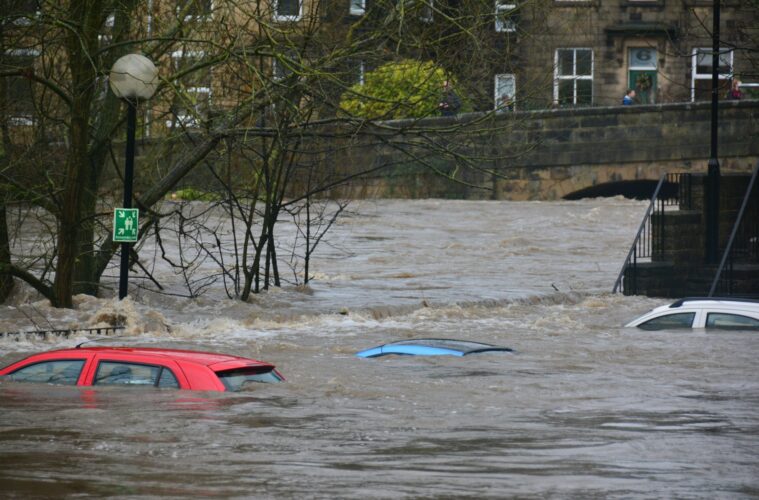
In early March, heavy rains triggered flooding across Kenya, with Nairobi bearing the brunt as rivers and drainage systems overflowed. Vehicles were swept away, critical infrastructure was damaged, and nearly 70 lives were lost, with thousands more displaced.
Such events are often described as natural disasters, but that term tells only part of the story. What Kenya is experiencing sits at the intersection of intensifying climate volatility and rapid urbanisation. The result is not just environmental disruption, but a recurring economic shock.
Recent history shows that these events are no longer isolated. In 2024, floods across Kenya claimed more than 300 lives, displaced hundreds of thousands and destroyed homes, farmland and transport networks. The Mai Mahiu flash floods alone killed over 60 people, underscoring how a single extreme weather event can wipe out years of household savings and business investment within hours.
While the human toll is immediate and visible, the economic cost is often less clearly measured. Flood-related losses in Kenya have repeatedly run into tens of billions of shillings when infrastructure damage, lost productivity and disrupted trade are taken into account. Yet only a small portion of these losses are insured, leaving households, businesses and government to absorb the financial impact directly.
This is where the conversation must shift. Climate risk insurance should no longer be viewed as a niche financial product, but as a form of economic infrastructure.
Just as roads enable commerce and energy systems power industry, insurance enables recovery. It ensures that when shocks occur, financial resources are available quickly, allowing households to rebuild, businesses to reopen and governments to stabilise their budgets. Without it, recovery is slower, more uneven and often more costly in the long run.
Kenya has already seen early evidence of what this approach can achieve. In agriculture, index-based insurance programmes have enabled farmers to receive payouts triggered by rainfall data rather than lengthy claims processes. While coverage remains limited, the model demonstrates how structured financial protection can stabilise incomes in the face of climate uncertainty.
The case for expanding such solutions is particularly urgent in urban areas. Nairobi’s drainage infrastructure, much of which was designed for a different era, is increasingly unable to cope with the scale of development and the intensity of modern rainfall patterns. Even with ongoing upgrades, climate projections suggest that extreme precipitation events will become more frequent and more severe. This creates a reality in which engineering solutions alone cannot eliminate risk, making financial resilience an essential complement.
In this context, parametric insurance offers a compelling path forward. By triggering payouts based on predefined thresholds- such as rainfall levels or flood depth- it can deliver rapid liquidity when it is needed most. For small businesses, this speed can determine whether operations resume within days or remain suspended for months. For households, it can mean the difference between recovery and prolonged financial distress.
Kenya is well positioned to scale such solutions. The country has one of the more developed insurance markets in the region, alongside a highly sophisticated mobile financial ecosystem anchored by platforms such as M-Pesa. This combination creates a unique opportunity to deliver affordable, accessible microinsurance products at scale.
However, unlocking this potential will require deliberate action. Policy alignment is critical. Climate risk insurance needs to be embedded within national disaster risk financing strategies and integrated into infrastructure planning. Regulatory frameworks should support innovation while ensuring consumer protection. County governments, which are often on the front line of climate response, can play a catalytic role by incorporating insurance solutions into urban resilience programmes.
The private sector must also reassess how it understands climate risk. Too often, climate exposure is treated as an environmental or compliance issue rather than a core financial concern. Yet disruptions to supply chains, damage to productive assets and business interruptions translate directly into measurable financial losses. Recognising climate risk as a balance sheet issue is no longer optional—it is essential for long-term resilience.
At the household level, the recent floods have exposed the scale of Kenya’s protection gap. Many of the most affected families live in high-risk areas without any form of insurance coverage, leaving recovery dependent on personal savings, informal networks or government assistance. As climate volatility increases, this model becomes increasingly unsustainable.
Closing this gap will require more than product innovation. It will depend on building trust. That means ensuring transparency, delivering timely payouts and communicating clearly about the value of insurance. In practice, nothing builds confidence more effectively than visible, reliable payouts when crises occur.
Ultimately, the lesson from Kenya’s recent floods goes beyond infrastructure failures or emergency response. It raises a more fundamental question about financial preparedness.
Kenya faces a clear choice: allow climate shocks to remain recurring economic setbacks or build a system in which those shocks are absorbed, managed and recovered from quickly.
Making climate risk insurance part of the country’s economic infrastructure is not a distant ambition. It is an immediate and necessary step toward a more resilient future.
By John Gangla – Associate General Manager- Minet Risk Solutions, Minet Kenya