

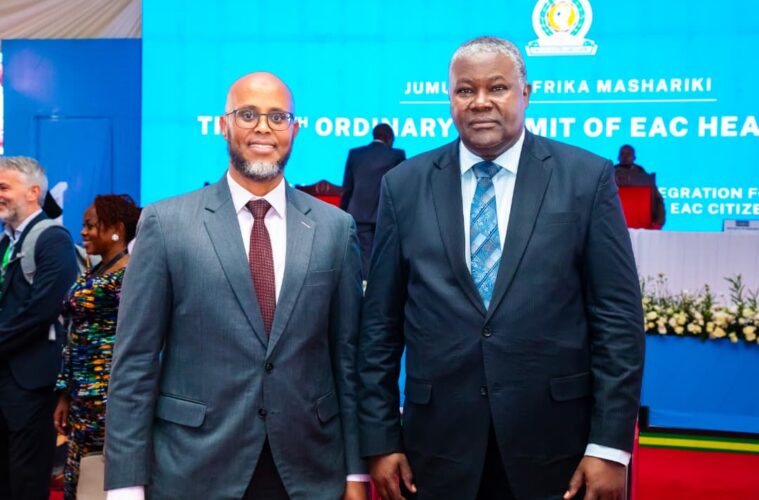
On March 7, 2026, the East African Community (EAC) reached a pivotal milestone during its 25th Ordinary Summit.
Held under the theme Deepening Integration for Improved Livelihoods of EAC Citizens, the gathering of regional leaders resulted in several “bold and decisive” resolutions aimed at stabilizing the bloc’s finances and removing long-standing barriers to trade.
The Summit also marked a transition in leadership, with H.E. Yoweri Kaguta Museveni, President of the Republic of Uganda, assuming the Chairmanship of the EAC. Additionally, Amb. Stephen Patrick Mbundi was officially appointed as the new Secretary General, signaling a fresh chapter for the Secretariat’s executive leadership.
Perhaps the most significant structural change was the adoption of a new sustainable financing formula. Moving away from a primarily equal-contribution model, the Summit approved a 50/50 split:
- 50% Equal Contributions: Every Partner State contributes a baseline amount.
- 50% Assessed Contributions: Based on each country’s economic capacity (average nominal GDP per capita over five years).
This shift ensures that larger economies, which benefit most from the integrated market, contribute proportionally. To clean the slate, the Summit granted a one-off 50% waiver on all existing arrears, provided the remaining balance is paid within two years. To prevent future defaults, a new schedule of sanctions is being finalized to ensure all eight Partner States meet their financial obligations.
For the regional business community, the most celebrated outcome was the directive to resolve all 27 outstanding Non-Tariff Barriers (NTBs) by June 30, 2026.
Historically, persistent issues, such as Kenya’s milk quotas and Tanzania’s restrictions on Ugandan sugar and tobacco, have stifled intra-regional commerce. By aligning this deadline with the end of the fiscal year, the Summit has pressured Partner States to harmonize national laws with regional trade commitments during their upcoming 2026/27 budget cycles.
The Summit officially launched the EAC Customs Bond, a digital regional guarantee framework. Traders can now secure an entire cross-border journey with a single bond. This is expected to reduce border delays and free up an estimated $2 billion in liquidity previously tied up in multiple national bond regimes.
As the EAC grows, the Summit emphasized the urgent need for newer members,the Democratic Republic of the Congo (DRC), Somalia, and South Sudan, to domesticate EAC treaties.
In a move to ensure commitment, the Summit decreed that nominations for high-ranking positions (such as Speaker or Judge President) will now be tied to a member state’s progress in implementing the integration roadmap. Furthermore, to prevent administrative gridlock in an eight-member bloc, the quorum for EAC meetings was adjusted to two-thirds of Partner States.
The regional roadmap for the next five years was solidified with the launch of the 7th EAC Development Strategy (2026/27–2030/31). This strategy focuses on accelerating economic transformation and requires all member states to align their national development plans with regional priorities.