

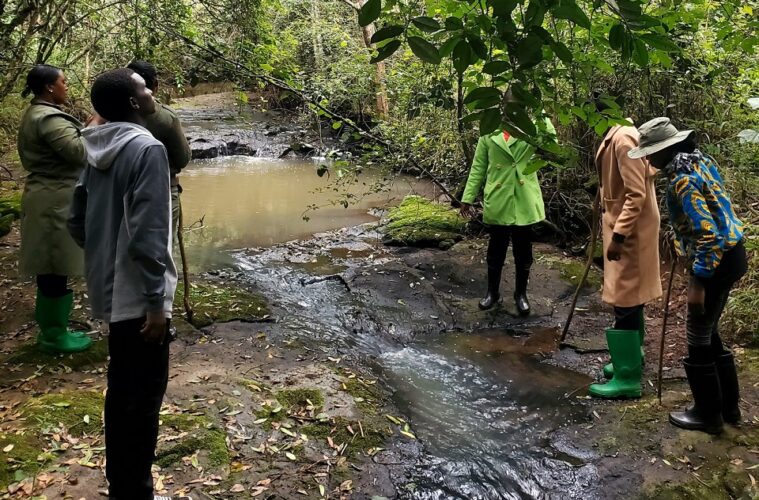
The Environment and Land Court (ELC) in Milimani has officially quashed the controversial licences issued for the development of a private golf range and restaurant within the protected Ngong Forest.
The ruling, delivered in ELCEP Petition E003 of 2025, marks the end of a protracted legal battle led by the Law Society of Kenya (LSK) against Karura Golf Range Limited, the National Environment Management Authority (NEMA), and the Kenya Forest Service (KFS).
Presiding over the case, the Court declared the approvals, including the Special Use Licence issued by KFS and the Environmental Impact Assessment (EIA) Licence granted by NEMA, as invalid, null, and void ab initio.
The court’s decision was rooted in several key findings:
- Constitutional Violations: The project was found to breach Articles 42, 69, and 70 of the Constitution, which guarantee every Kenyan the right to a clean and healthy environment.
- Lack of Public Participation: The judge noted that the licensing process was shrouded in “deliberate opacity,” failing to meet statutory requirements for meaningful engagement with the public.
- Protection of Gazetted Land: The Court affirmed that Ngong Forest is a vital ecological asset that has already been significantly depleted, shrinking from its original 2,000 hectares to just 1,224.4 hectares.
The controversy began in late 2024 when it emerged that a private entity, Karura Golf Range Limited, had secured clearance to build a mini-golf park and an entertainment joint deep within the Miotoni Block of the forest. The news sparked immediate public outrage, leading Environment Cabinet Secretary Aden Duale to temporarily suspend the licences in December 2024 pending a full audit.
However, the LSK’s petition sought a permanent legal safeguard. By granting these orders, the Court has now prohibited any future commercial development in the Miotoni Block, effectively ending the threat of destructive commercial encroachment.
Environmentalists have hailed the ruling as a stern reprimand to state regulatory agencies. The verdict reinforces the principle that public forests are not land banks for private commercial interests but are protected spaces held in trust for the people of Kenya.